
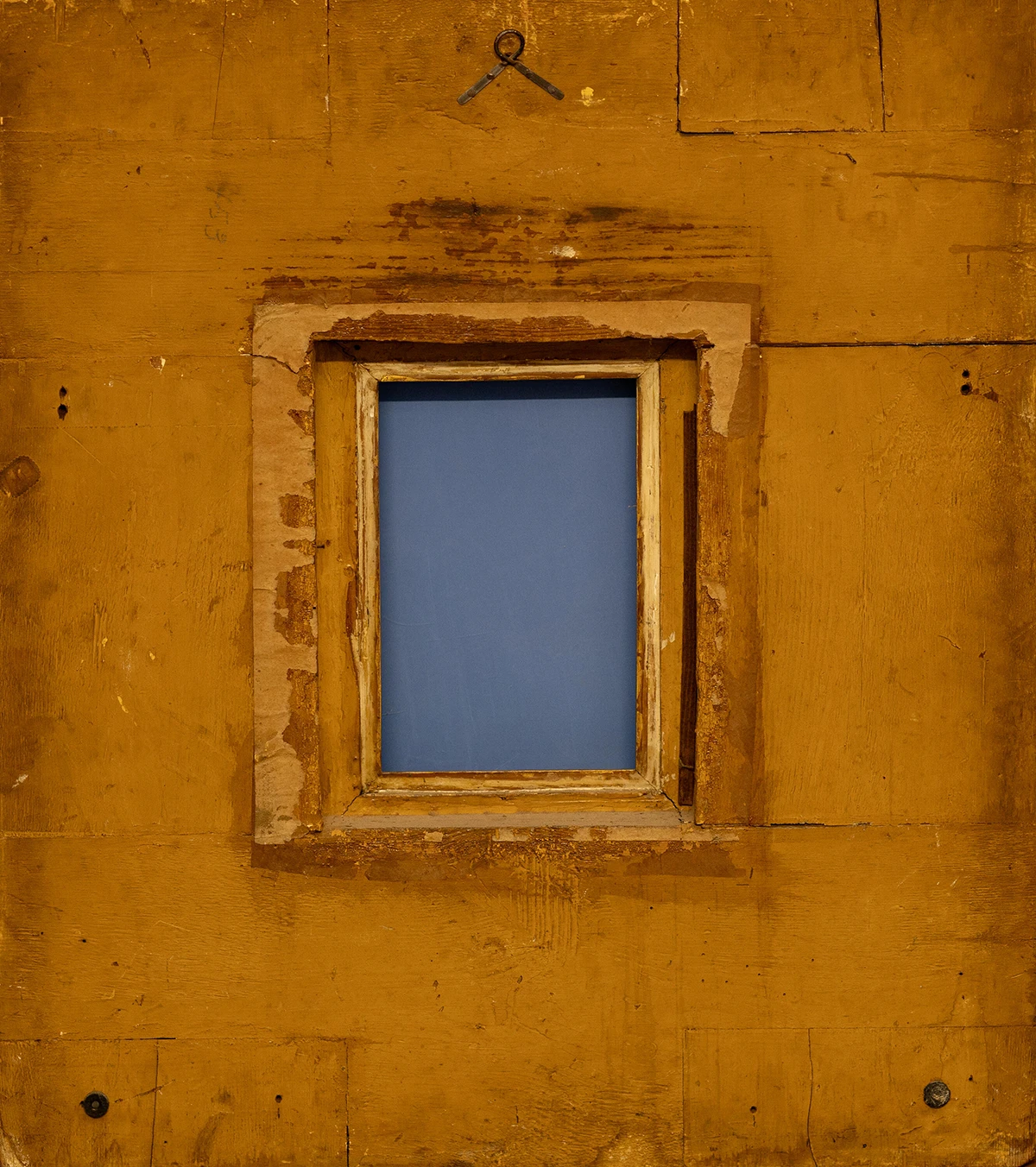
Structure and Morphology
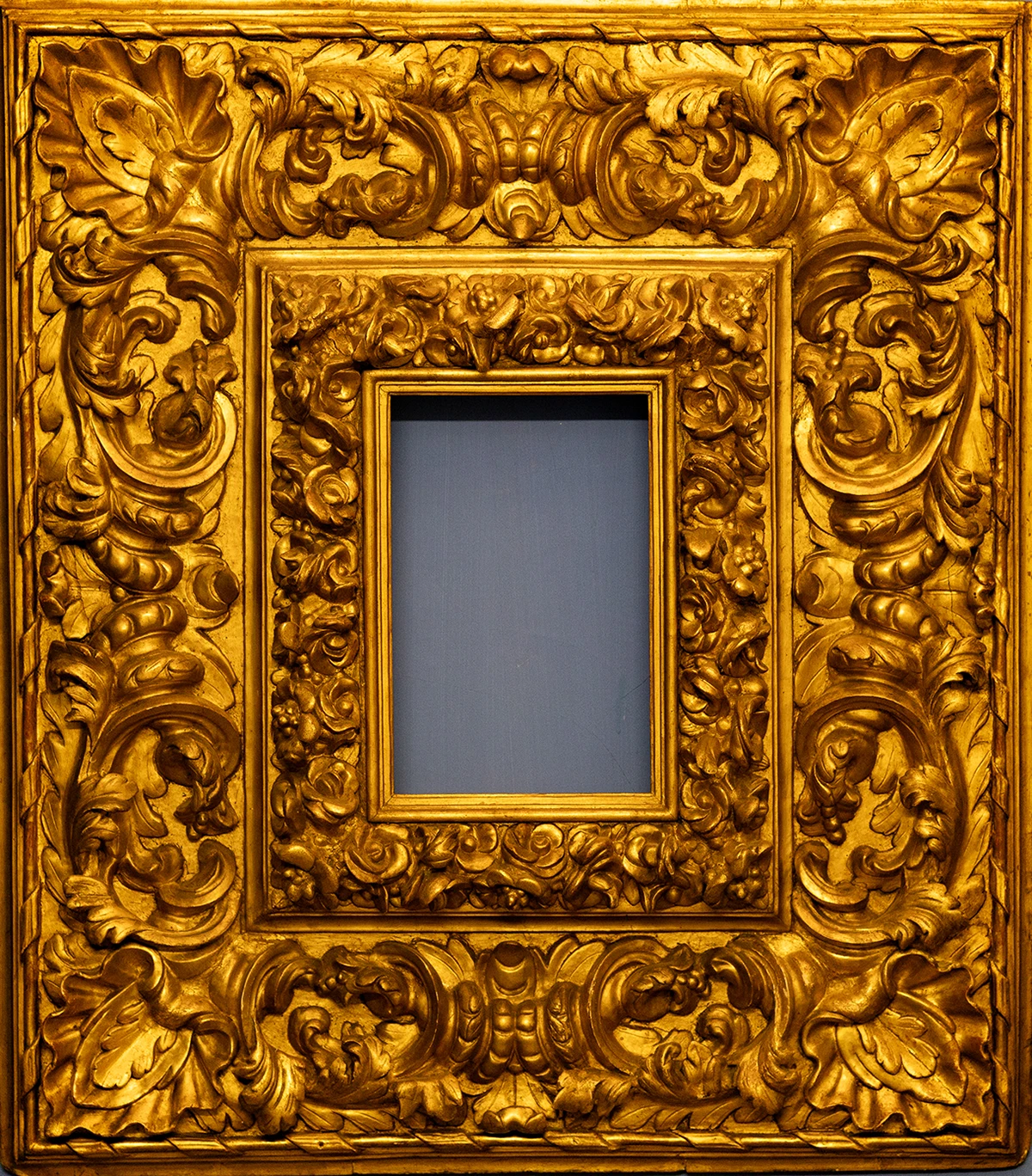
The frame features a double-cassetta construction, articulated across three superimposed planes of increasing plastic elaboration. The outer edge is defined by a rope-twist molding (godronatura a torciglione), a typologically recurrent element in Italian production of the period. The exceptional width of the outer rail — proportionally far greater than the sight opening — lends the piece a monumental character of rare impressiveness.
Decorative Program
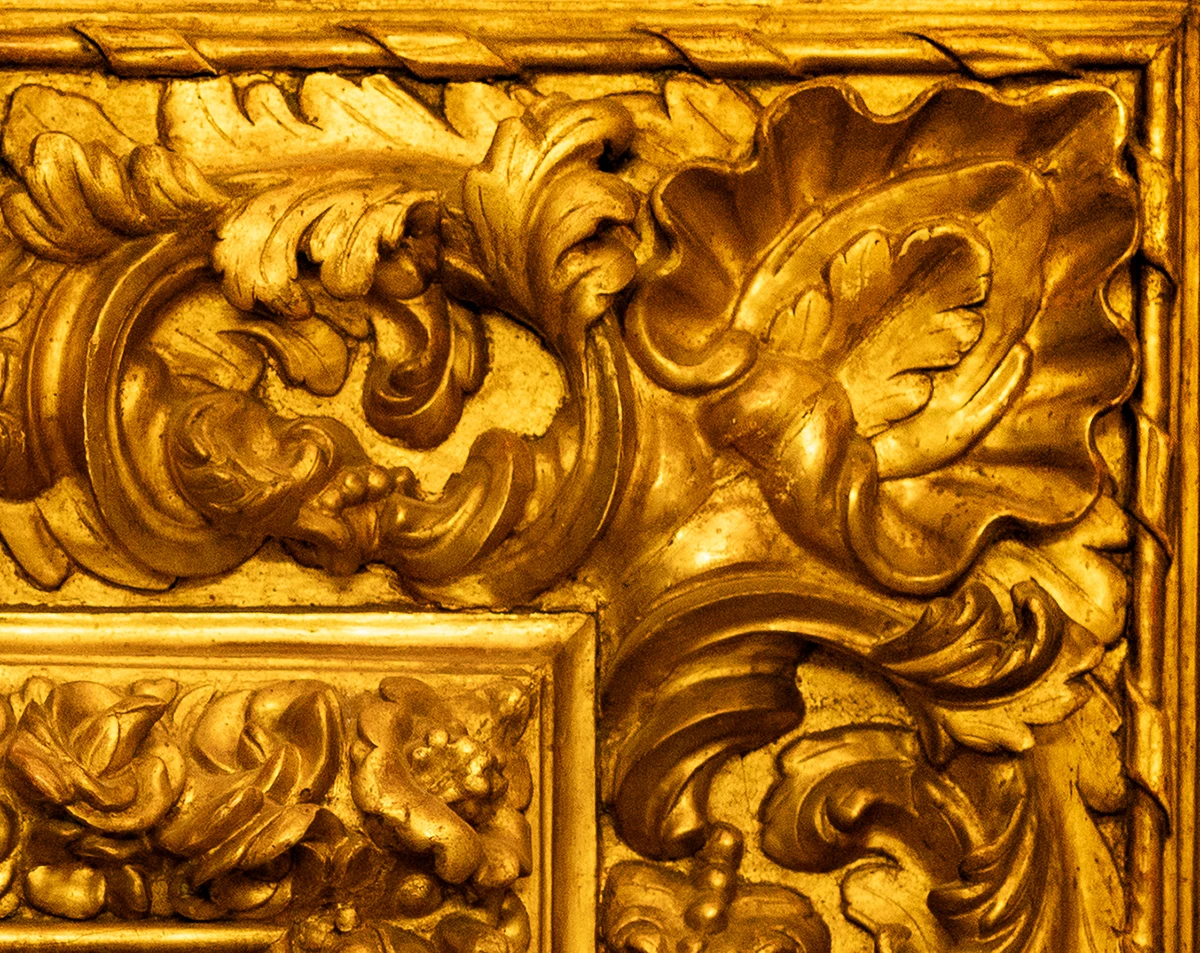
The carving, of extraordinary executive quality, unfolds across two distinct registers:
- Outer rail: A lush repertoire of curling, vibrant acanthus leaves, fleshy volutes, lobed oak leaves, berries, and vegetal scrolls intertwining in compositions of great plastic vitality. At the corners, powerful cartouche elements serve as compositional anchors, connecting the four sides with full command of three-dimensionality. At the center of each side, a phytomorphic mask punctuates the decorative rhythm with a centripetal function.
- Inner rail (slip): A finer, more densely packed decorative register, featuring small blossoms, stylized rosettes, grape clusters, and foliage caught in continuous motion — almost textile in the density of its modeling — an element that finds close parallels in both Tuscan production and that of North-Central Italy in the early 18th century.
The connecting flat between the two rails is resolved with a simple plain molding, creating an effective visual pause that enhances the contrast between the two carved registers.
Technique and Gilding
The gilding is executed in gold leaf over a chalk ground and red-orange bole preparation, still visible in areas of natural wear — a circumstance that attests to the authenticity of the period finish. The surface displays a warm, deep golden patina, with tonal variations between the burnished areas (raised surfaces, polished with an agate stone) and the matte areas (grounds and recesses), an effect characteristic of water gilding in the Italian craft tradition.
Verso
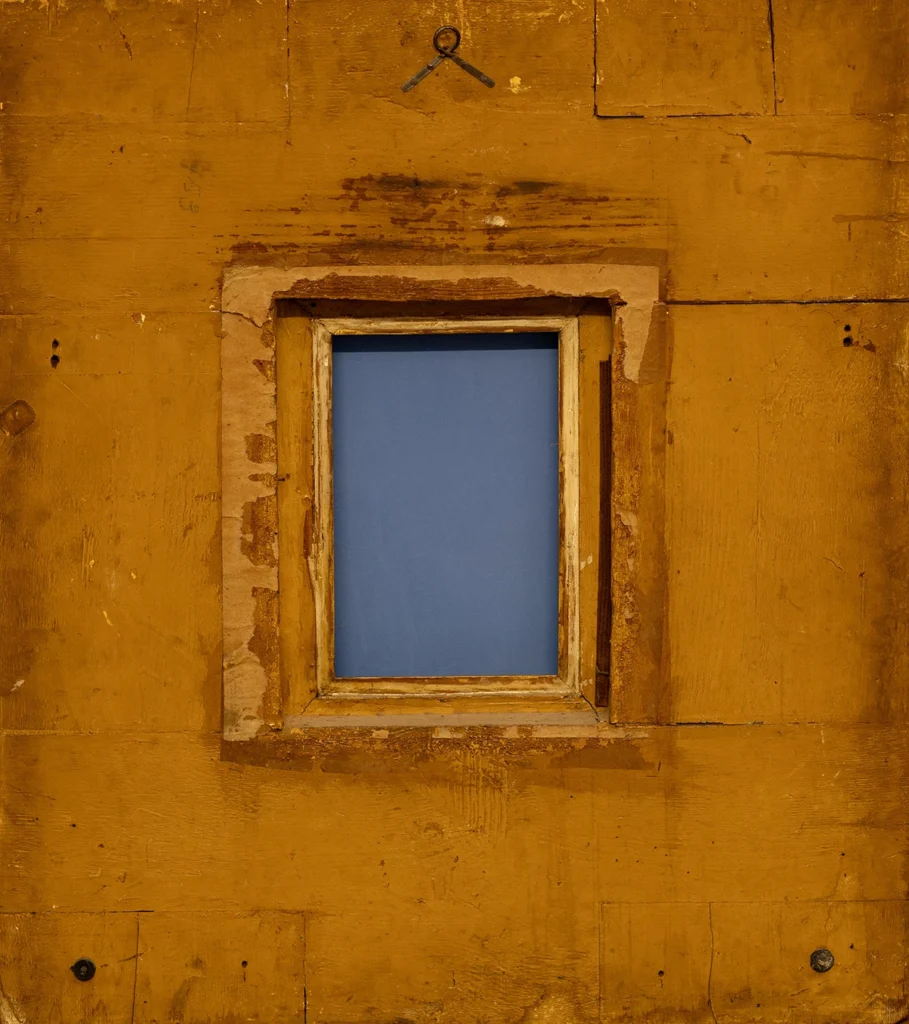
The reverse reveals the original constructional structure: wood planks assembled with exposed joinery, bearing layers of chalk ground preparation and subsequent ochre-yellow paint fills. The presence of an original hand-forged iron hanging bracket with a twisted ring, along with corner reinforcement blocks, is consistent with a dating between the late 17th and early 18th century. Traces of early restorations and the marks of time bear witness to the object’s long conservation history.
Attribution and Dating
On the basis of the ornamental repertoire — flowing acanthus, oak leaves, vegetal scrollwork, centripetal mask elements — as well as the constructional solutions and quality of carving, the frame is to be referred to the production of Central Italy, most likely Tuscany, between the late 17th and the first quarter of the 18th century. A more precise attribution would require direct comparative analysis with documented pieces and physical examination of the object.


