Stylistic Analysis and Comparisons
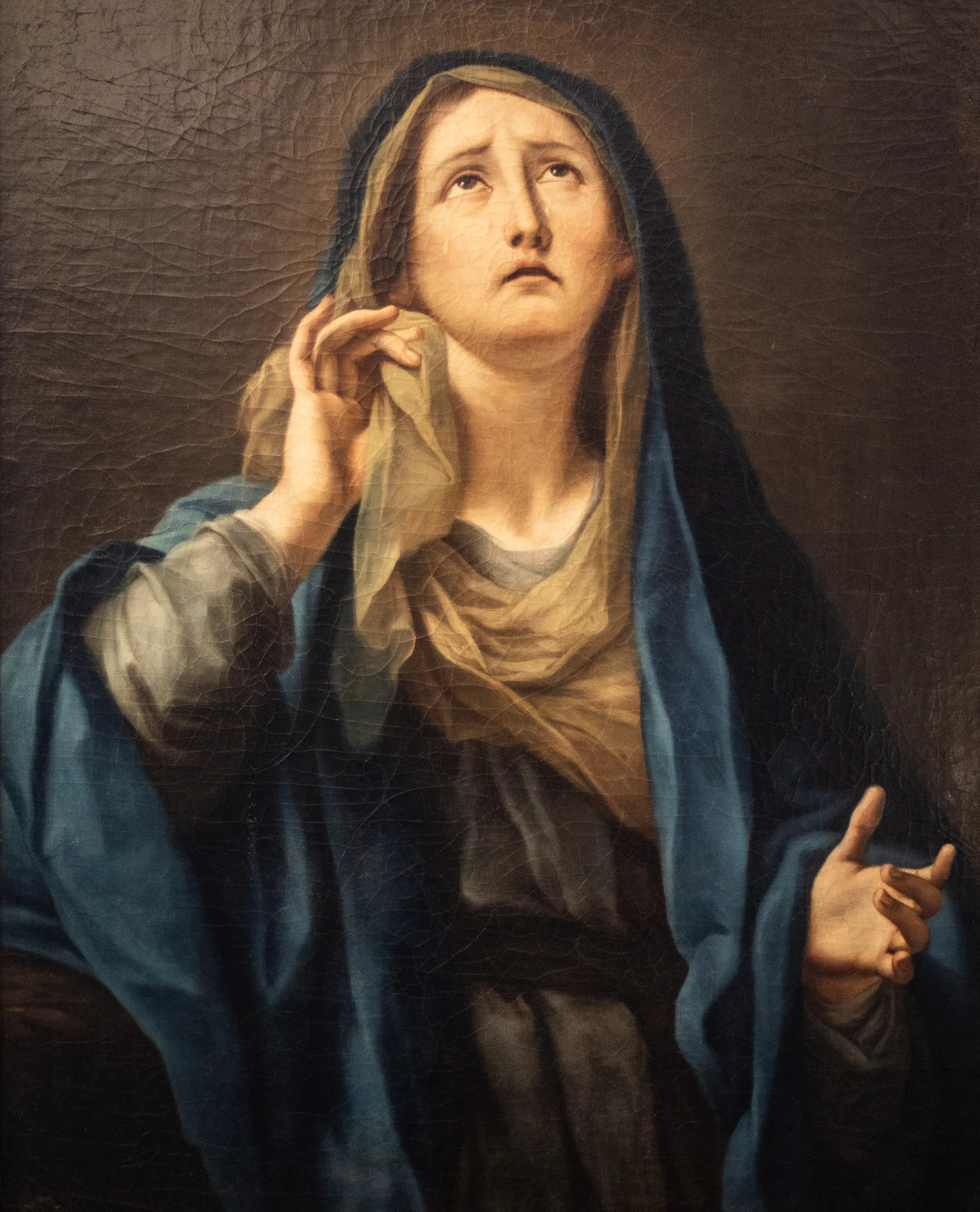
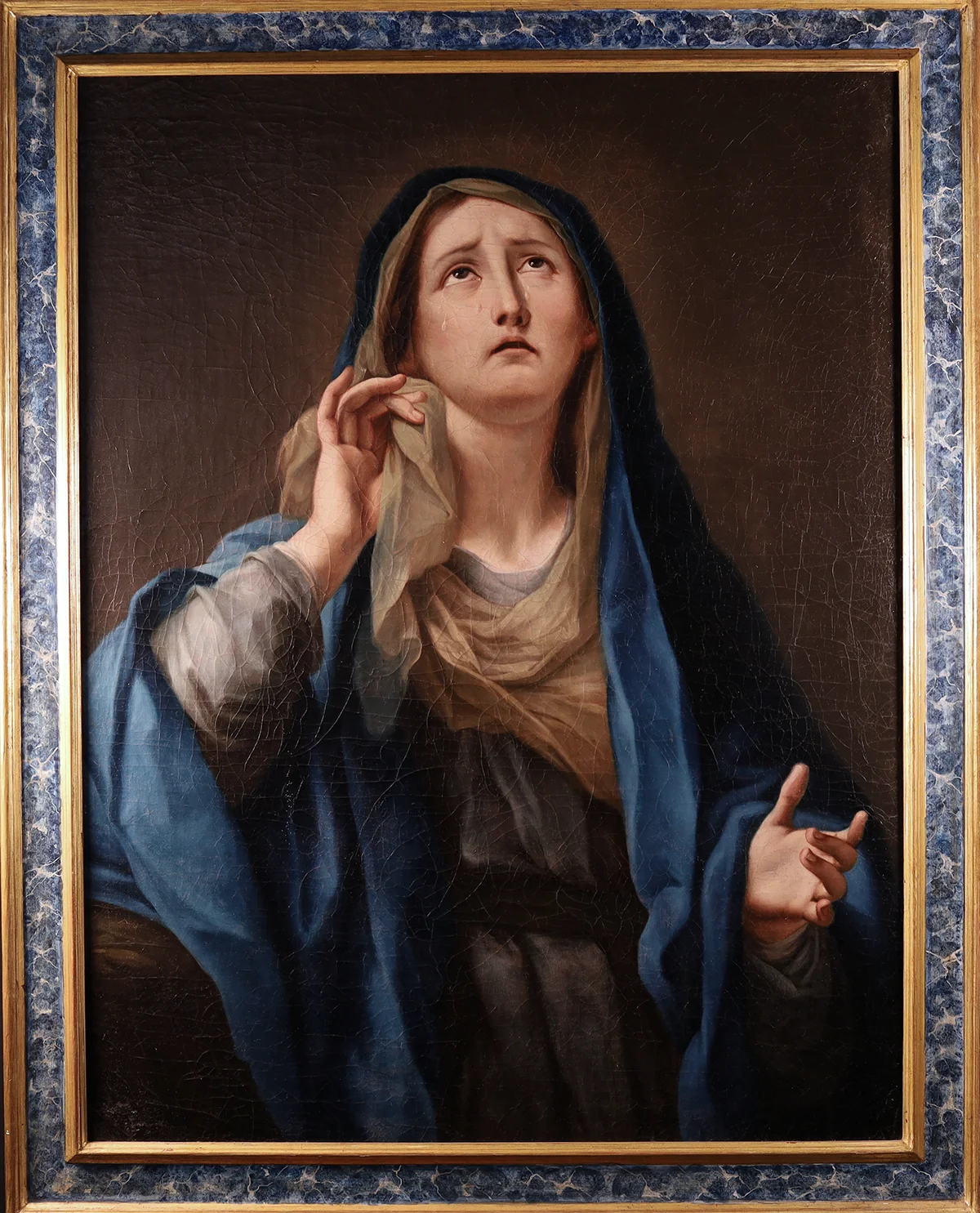
The painting fits squarely within the tradition of Roman devotional painting of the early eighteenth century, as shaped by the art of Francesco Mancini — a student of Carlo Cignani in Forlì and Bologna, trained in the academic tradition of the Carracci school — and subsequently deeply influenced by the work of Carlo Maratta, a fellow native of the Marche region. Mancini’s encounter with Maratta’s mature work and his circle proved a turning point in his career, steering his style toward an elegant classicism and a particularly refined rendering of human emotion.
The subject finds a precise parallel in the autograph Mater Dolorosa preserved at the Pinacoteca Civica of Fano — a city with which Mancini maintained a privileged relationship: in 1726 the painter was granted honorary citizenship of Fano, in recognition of his role as a key cultural reference for the Marche region. A further version of the composition is documented at the Galleria Nazionale delle Marche in Urbino. The replication of the subject — a common practice in the painter’s workshop, documented for other compositions such as the Rest on the Flight into Egypt — confirms that particularly successful inventions were reworked by the artist himself or by close collaborators to meet the devotional demand of the time.
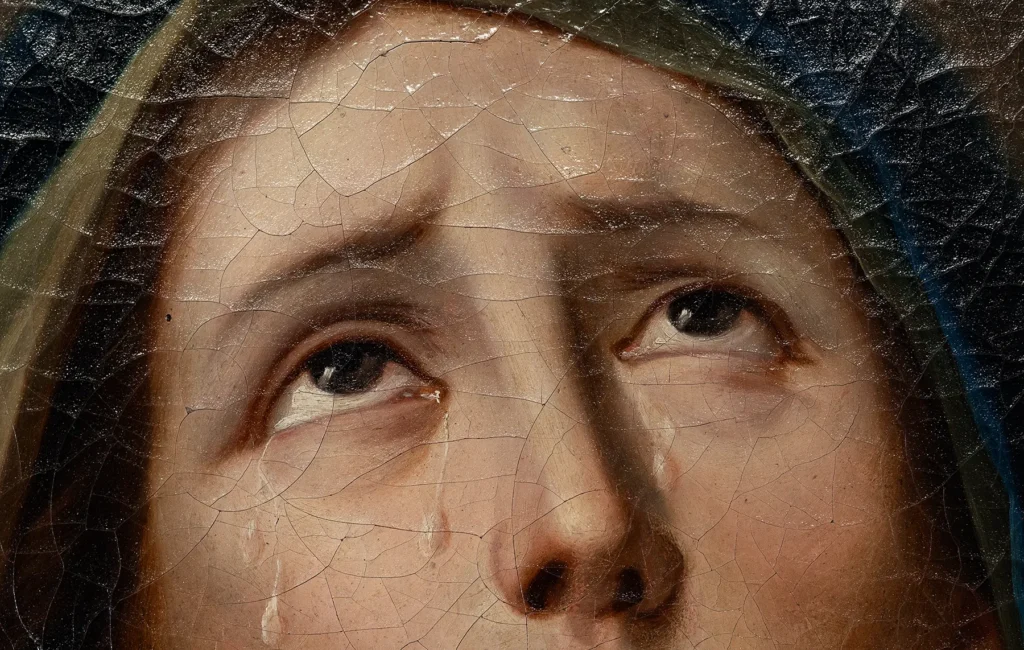
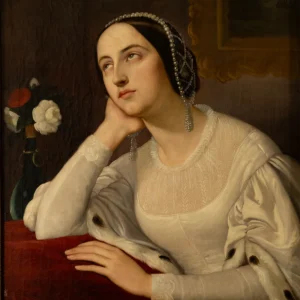
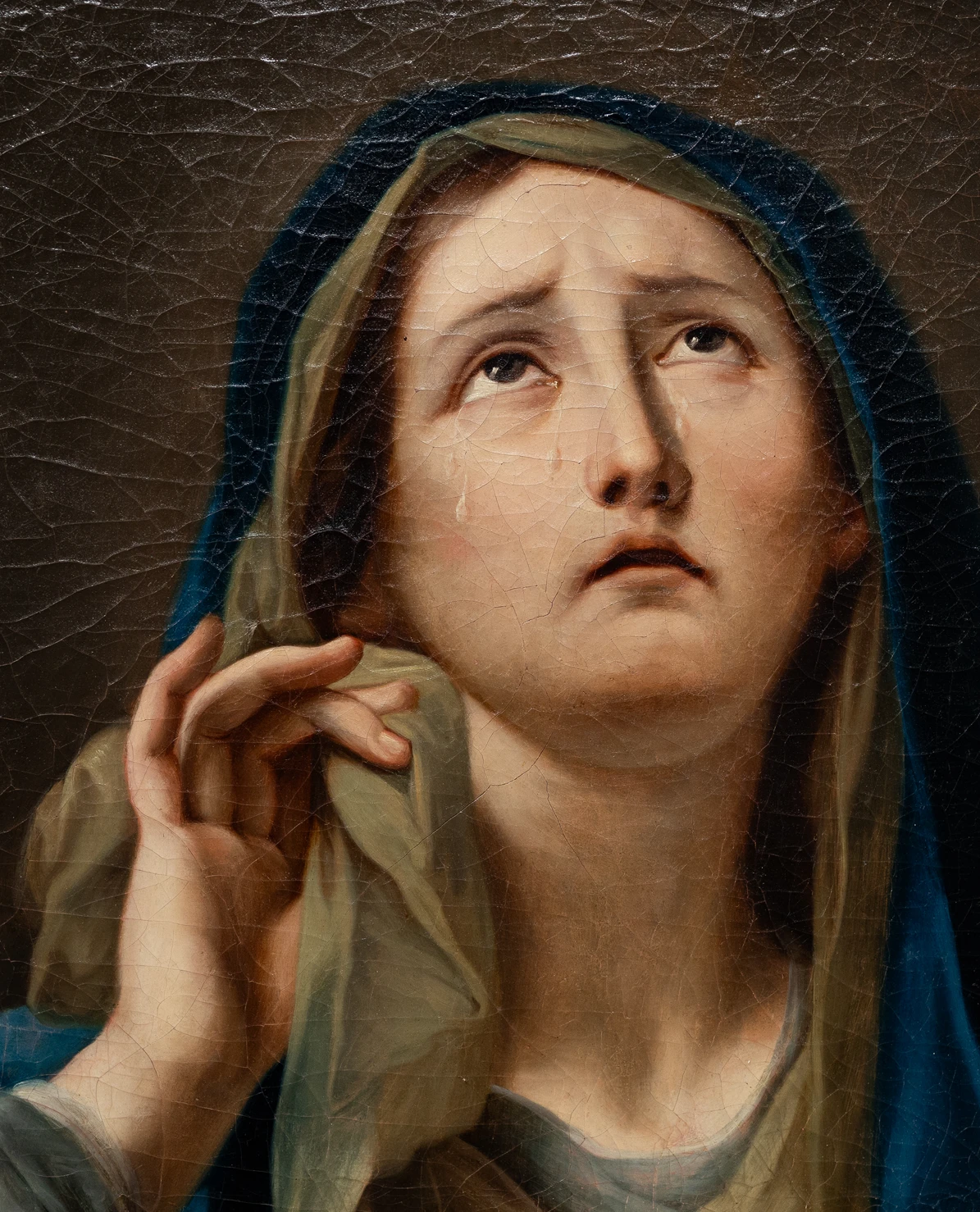
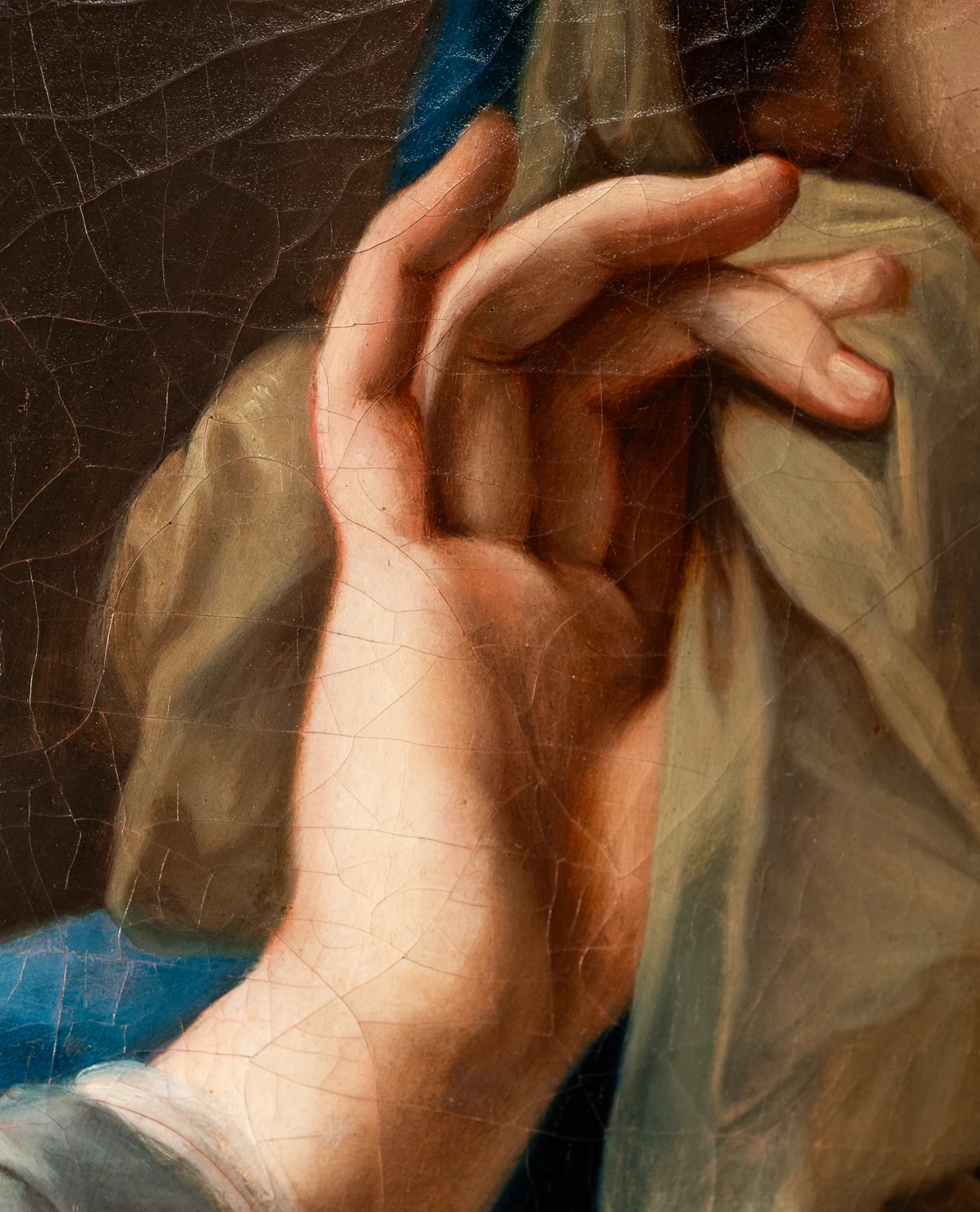
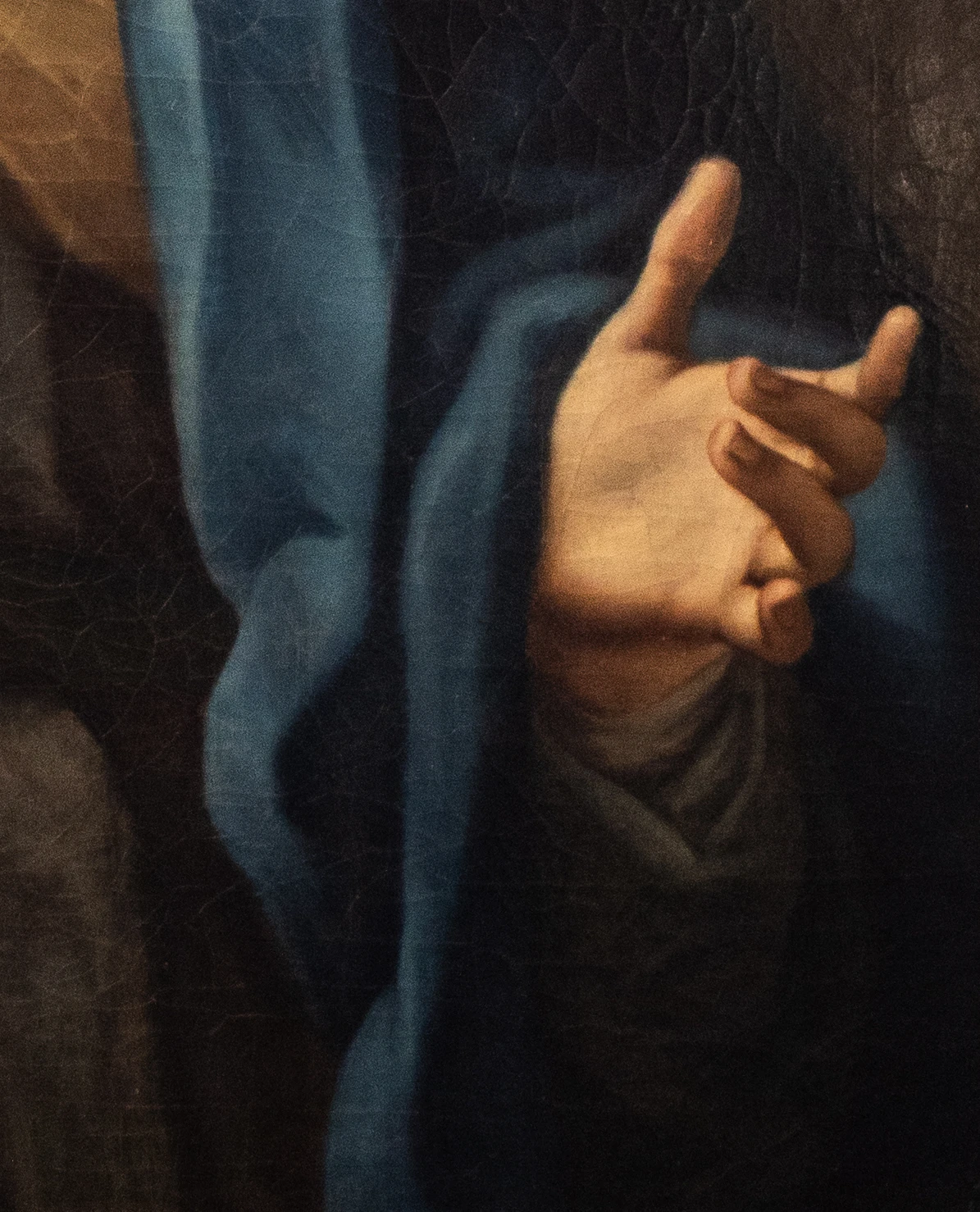
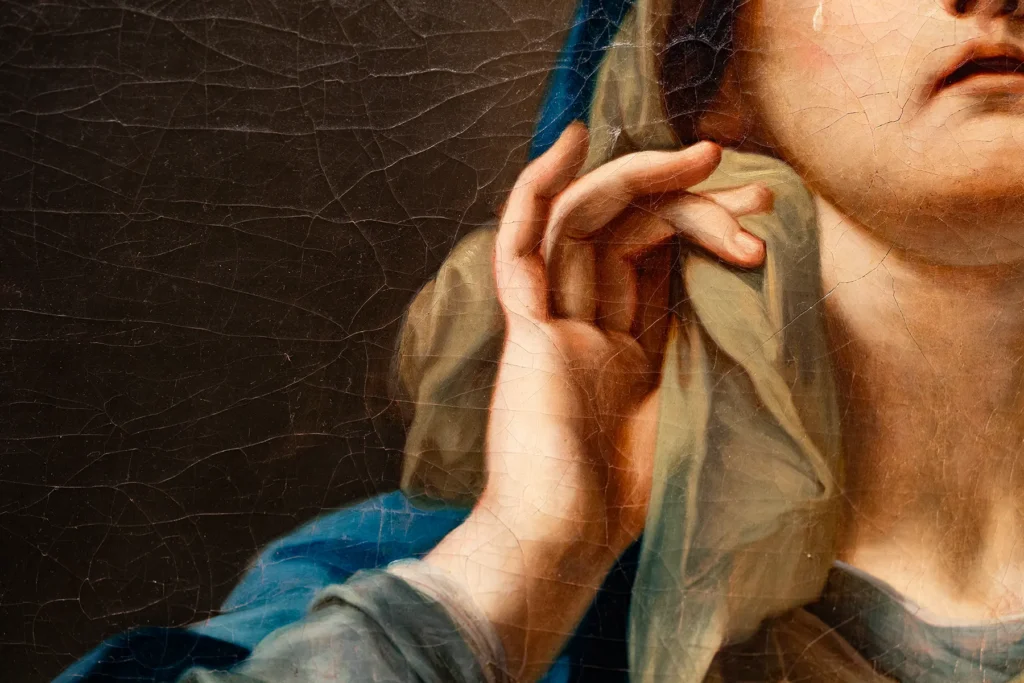
The style of the present painting reveals a very close affinity with the Mancini prototype: the diaphanous, pearlescent rendering of figures and the poetic emotional intensity are unmistakable hallmarks of the master’s manner. The high quality of execution, especially in the details of the face and hands, alongside certain simplifications in the drapery compared to the Fano autograph, points to the immediate circle of the painter — most likely a studio collaborator or a highly skilled pupil. Documented names include Sebastiano Ceccarini, Domenico Corvi, Giovanni Battista Ronchelli, Niccolò Lapiccola, and Canon Giovanni Andrea Lazzarini.
Historical and Artistic Context
Francesco Mancini was born in Sant’Angelo in Vado on April 24, 1679, and died in Rome in August 1758. After his training under Carlo Cignani, he moved to Rome, where he achieved the highest levels of institutional recognition: he was admitted to the Académie de France in Rome (1732), the Congregation of the Virtuosi at the Pantheon (1743–1745), and served as director of the Accademia di San Luca (1750–51). His contemporaries regarded him as one of the finest painters of his age, admiring above all the clear and luminous tones of his work.
The subject of the Mater Dolorosa, widely prevalent in eighteenth-century devotional patronage, was particularly well suited to Mancini’s pictorial temperament — capable of infusing sacred images with an intimate, lyrical sensibility far removed from both Baroque pathos and Neoclassical austerity.
- Provenance to be determined.
- Condition Generally good: uniform antique craquelure throughout, consistent with a mid-eighteenth-century dating.
Selected Bibliography
- G. Sestieri, Profilo di F. Mancini, in Storia dell’arte, 1977, no. 29, pp. 67–69; entry Mancini, Francesco, in Dizionario Biografico degli Italiani, Treccani; La Pinacoteca civica di Fano: catalogo generale, edited by A.M. Ambrosini Massari and F. Battistelli.